
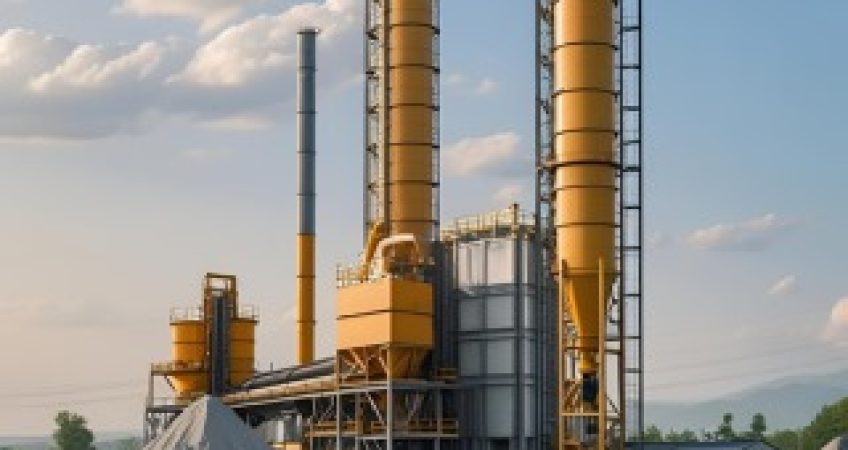
JSW Cement’s Low-Clinker Strategy Cuts Industry Emissions
The Cement Industry faces mounting pressure to reduce its environmental impact, contributing approximately 8% of global CO2 emissions annually. As one of India’s leading cement manufacturers, JSW Cement has pioneered an innovative approach through low-clinker cement production, setting new standards for sustainable manufacturing practices.
This strategic shift represents more than just environmental responsibility it demonstrates how forward-thinking cement manufacturing consultancy approaches can transform traditional production methods while maintaining product quality and performance.
What is Low-Clinker Cement?
Low-clinker cement reduces the proportion of clinker the most carbon-intensive component in traditional cement—by replacing it with supplementary cementitious materials (SCMs). While conventional Portland cement contains 95% clinker, low-clinker alternatives can reduce this to 50-70% without compromising structural integrity.
The production process incorporates materials like fly ash, slag, and limestone, which require significantly less energy to process than clinker. This fundamental change in cement process engineering delivers substantial environmental benefits while maintaining the durability and strength properties essential for construction applications.
Cement industry consultants recognize this approach as one of the most viable paths toward achieving carbon neutrality in cement manufacturing, making it a cornerstone of modern sustainable construction practices.
JSW Cement’s Strategic Implementation
JSW Cement’s low-clinker strategy involves sophisticated cement plant engineering services that optimize the blend of alternative materials. Their approach centers on three key components:
- Advanced Blending Technology: The company has invested in state-of-the-art equipment that precisely controls the mixing ratios of clinker and SCMs. This cement plant design and construction philosophy ensures consistent quality while maximizing carbon reduction potential.
- Strategic Material Sourcing: JSW Cement has established partnerships with power plants and steel manufacturers to secure reliable supplies of fly ash and slag. This integrated supply chain approach reduces transportation emissions while creating value from industrial waste products.
- Quality Control Systems: Comprehensive testing protocols ensure that reduced-clinker formulations meet or exceed performance standards. Their cement plant commissioning support includes rigorous validation processes that verify product specifications throughout production cycles.
Measurable Environmental Impact
JSW Cement’s low-clinker initiative has achieved remarkable results in carbon footprint reduction. The company reports a 20-25% decrease in CO2 emissions per ton of cement produced compared to traditional manufacturing methods.
This reduction translates to approximately 150-200 kg less CO2 per ton of cement, representing millions of tons of avoided emissions across their production facilities. The environmental benefits extend beyond carbon reduction, including decreased energy consumption and reduced mining pressure on limestone quarries.
Leading cement consulting companies highlight JSW Cement’s approach as a benchmark for the industry, demonstrating that large-scale environmental improvements are achievable through strategic process modifications and commitment to sustainable practices.
Benefits and Construction Applications
Low-clinker cement offers multiple advantages for construction projects while supporting environmental goals:
- Enhanced Durability: The inclusion of SCMs often improves long-term concrete performance, including better resistance to chemical attack and reduced permeability.
- Cost Effectiveness: Reduced clinker content can lower production costs, making sustainable construction more economically attractive for builders and developers.
- Versatile Applications: Low-clinker cement performs excellently in various construction scenarios, from residential buildings to major infrastructure projects like bridges and highways.
Construction companies increasingly specify low-clinker cement for projects seeking green building certifications, making it an essential component of sustainable development initiatives across India.
Leading India’s Cement Sustainability Future
JSW Cement’s low-clinker strategy exemplifies how innovative cement plant project management can drive industry-wide transformation. Their success demonstrates that environmental responsibility and business performance can align effectively through strategic planning and technological investment.
As cement plant consultants in India increasingly recommend low-clinker approaches, JSW Cement’s pioneering work provides a roadmap for other manufacturers seeking to reduce their carbon footprint. Companies like TECHCEM Consultancy and Engineering Pvt. Ltd. support these transitions by offering specialized cement plant consultancy services in India, helping manufacturers implement sustainable production strategies.
The cement industry’s path toward sustainability requires continued innovation and commitment from industry leaders. JSW Cement’s low-clinker strategy proves that significant environmental improvements are achievable while maintaining the quality and reliability that modern construction demands.