
Table of Contents
The Growing Importance of Alternative Fuels in Cement Production
The cement industry is one of the largest contributors to global CO₂ emissions. With sustainability becoming a top priority, producers are increasingly adopting alternative fuels in cement production to minimize environmental impact. Traditional fossil fuels such as coal and petcoke are being replaced with cleaner, renewable, or waste-derived options. Companies like TECHCEM Consultancy and Engineering Pvt. Ltd. are leading this transformation through technical expertise and sustainable engineering solutions.
Types of Alternative Fuels Used in Cement Production
- Biomass Fuels: Biomass sources such as agricultural residues, wood chips, and rice husks are renewable and carbon-neutral, making them ideal for replacing coal. When used correctly, biomass fuels help reduce net CO₂ emissions without compromising the efficiency of the kiln process.
- Refuse-Derived Fuels (RDF): Refuse-derived fuels, created from municipal solid waste, plastics, and paper residues, provide an eco-friendly way to recover energy from non-recyclable materials. RDF not only reduces landfill waste but also helps cement plants cut down fuel costs significantly.
- Industrial By-products and Used Oils: Used tires, waste oils, and solvent residues are increasingly being utilized as alternative fuels in cement kilns. Their high calorific value makes them suitable substitutes for fossil fuels, contributing to both cost savings and sustainability.
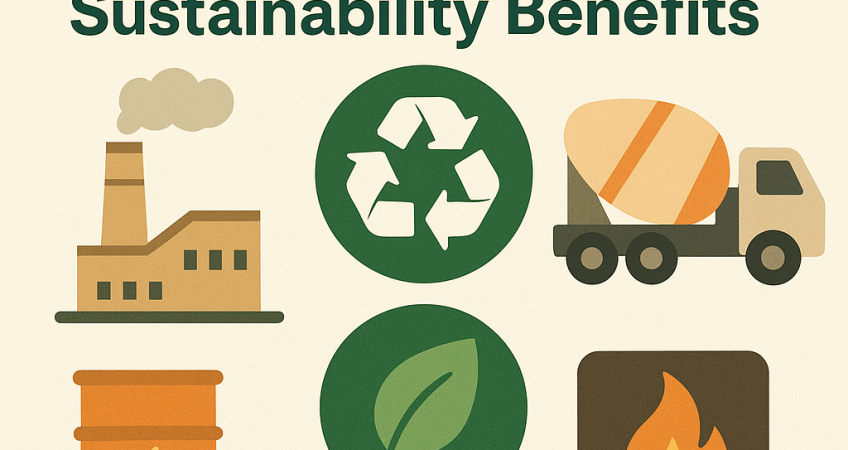
Sustainability Benefits of Using Alternative Fuels
- Reduced Carbon Footprint: Switching to alternative fuels helps cement manufacturers lower their greenhouse gas emissions. For every ton of fossil fuel replaced, significant amounts of CO₂ can be avoided, directly supporting global climate goals.
- Waste Reduction and Circular Economy: Utilizing industrial and municipal waste as fuel aligns with circular economy principles. It promotes responsible waste management and transforms waste into a valuable energy source.
- Cost Efficiency and Energy Security: Alternative fuels often come at lower costs compared to imported fossil fuels. This not only stabilizes energy expenses but also enhances energy independence for cement producers.
TECHCEM’s Expertise in Sustainable Cement Production
TECHCEM Consultancy and Engineering Pvt. Ltd. offers end-to-end technical solutions for integrating alternative fuels into existing cement production systems. Their team specializes in fuel characterization, combustion optimization, and emission control, ensuring seamless transition and compliance with environmental standards.
From feasibility studies to full-scale implementation, TECHCEM provides data-driven and innovative approaches that enable cement plants to adopt greener practices without compromising performance or profitability.
A Step Toward a Greener Future
The adoption of alternative fuels in cement production marks a major step toward a low-carbon and sustainable cement industry. With the guidance of experts like TECHCEM Consultancy and Engineering Pvt. Ltd., manufacturers can achieve operational excellence while contributing to global environmental sustainability.
As the world moves closer to net-zero goals, the shift to alternative fuels is not just an option it’s a necessity for a cleaner, more resilient cement future.
Ready to make your cement plant more sustainable? Let TECHCEM guide you in adopting alternative fuels that cut emissions and improve efficiency. Contact our experts now!