
Table of Contents
Net-Zero Cement with Carbon Capture Technology
The Cement Industry is the backbone of modern construction, but it comes at a significant environmental cost. As the third-largest industrial source of pollution, cement production is responsible for about 8% of global carbon dioxide (CO₂) emissions. This massive carbon footprint is a major obstacle to achieving global climate targets. For cement manufacturing consultancy firms and their clients, the race is on to find viable solutions.
The primary challenge lies in the chemical process of making clinker, the key ingredient in cement. This process, called calcination, involves heating limestone to extreme temperatures, which releases large amounts of CO₂. A second source of emissions comes from burning fossil fuels to heat the kilns. As the world pushes towards a net-zero future, the cement industry is under immense pressure to innovate.
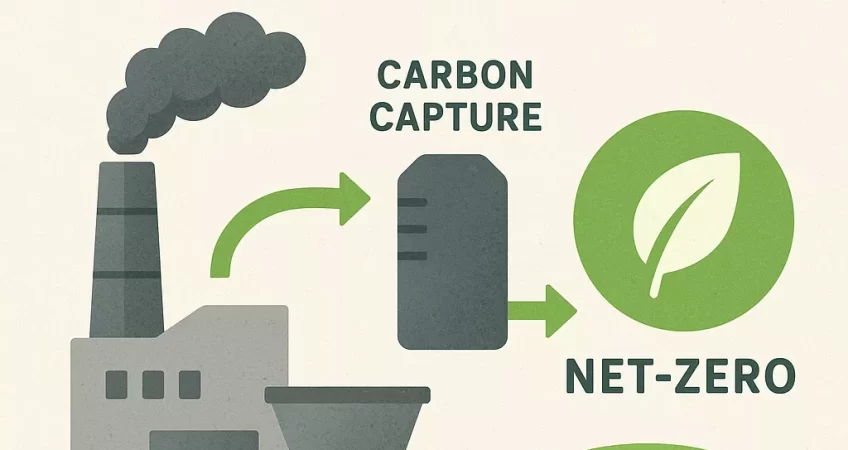
Fortunately, a promising solution is gaining traction: Carbon Capture, Utilization, and Storage (CCUS). This technology offers a pathway to drastically reduce emissions from cement plants, making the goal of “net-zero cement” an achievable reality. This guide explores how carbon capture technology works, the challenges to its adoption, and why it is essential for the future of sustainable construction.
Understanding Carbon Capture in Cement Production
Carbon capture technology is designed to trap CO₂ emissions at their source before they can enter the atmosphere. In the context of a cement plant, this means capturing the CO₂ released during both the calcination process and fuel combustion. As a leading cement plant consultant in India, TECHCEM Consultancy and Engineering Pvt. Ltd. recognizes the transformative potential of integrating these systems into both new and existing facilities.
The CCUS process generally involves three main stages: capture, transport, and storage or utilization.
How Does Carbon Capture Work?
There are several methods for capturing CO₂, but three are most relevant for the cement industry:
- Post-Combustion Capture: This is currently the most mature and widely discussed technology for cement plants. In this method, the flue gas produced after burning fossil fuels is passed through a chemical solvent (usually an amine-based liquid) that absorbs the CO₂. The CO₂-rich solvent is then heated in a separate unit, which releases a highly concentrated stream of CO₂. This captured CO₂ can then be compressed and prepared for transport. This method can be retrofitted to existing plants, making it a flexible option for many producers.
- Pre-Combustion Capture: This approach involves converting the fuel source into a mixture of hydrogen and CO₂ before it is burned. The CO₂ is then separated from the hydrogen, and the hydrogen is used as a clean fuel to heat the cement kiln. While effective, this method requires significant modifications to the plant’s existing setup and is often more complex and costly to implement.
- Oxy-Combustion: In this process, fuel is burned in pure oxygen instead of air. This produces a flue gas that is primarily composed of CO₂ and water vapor. The water can be easily condensed and removed, leaving a nearly pure stream of CO₂ that is ready for compression and storage. This method offers high capture efficiency but requires an air separation unit to produce the pure oxygen, which is an energy-intensive process itself.
Each of these methods is a core component of modern cement process engineering and is evaluated by cement consulting companies to determine the best fit for a specific plant’s design and operational goals.
Challenges and Solutions for Adoption
While carbon capture technology presents a clear path to decarbonization, its widespread adoption faces several hurdles. Cement plant project management must account for these challenges from the initial design phase to ensure successful implementation.
Key Hurdles in Implementing CCUS
- High Capital Costs: The initial investment required to build and install carbon capture equipment is substantial. The technology can add hundreds of millions of dollars to the cost of a new cement plant or a retrofitting project. This is a significant barrier for many companies, especially in competitive markets where profit margins are thin.
- Increased Energy Demand: Carbon capture systems, particularly post-combustion and oxy-combustion methods, require a significant amount of energy to operate. This “energy penalty” can increase a plant’s total energy consumption by 25-40%, leading to higher operational costs and potentially creating additional indirect emissions if the energy source is not renewable.
- Lack of Infrastructure for Transport and Storage: Once CO₂ is captured, it needs to be transported (usually via pipelines) to a suitable location for permanent storage deep underground in geological formations. The development of this transportation and storage infrastructure is still in its early stages in many regions, including India.
- Regulatory and Policy Gaps: A clear and supportive regulatory framework is needed to incentivize investment in CCUS. This includes carbon pricing mechanisms, tax credits, and clear legal guidelines for the long-term storage of CO₂. Without these policies, the business case for carbon capture remains challenging.
Finding Viable Solutions
Overcoming these challenges requires a concerted effort from cement plant consultants, engineering services, and policymakers.
- Financial Incentives and Carbon Pricing: Governments can play a crucial role by introducing carbon taxes or emissions trading schemes that make emitting CO₂ more expensive. This creates a stronger financial incentive for companies to invest in capture technologies. Tax credits and grants can also help offset the high initial capital costs.
- Technological Innovation: Ongoing research and development are focused on creating more efficient and less energy-intensive capture methods. Innovations in new solvents, membranes, and sorbents promise to reduce both the capital and operational costs of CCUS in the future.
- Developing Shared Infrastructure: To address the transport and storage issue, the development of shared “CO₂ hubs” and pipeline networks is essential. This allows multiple industrial facilities to share the cost of infrastructure, making it more economically viable for everyone. Cement plant design and construction projects should consider proximity to potential storage sites or transport networks.
- Creating a Market for Utilized Carbon (CCU): Instead of just storing CO₂, it can also be used to create valuable products. This includes producing synthetic fuels, chemicals, and building materials like carbon-cured concrete. Developing these markets provides a new revenue stream that can help offset the cost of capture.
The Future is Net-Zero Cement
Achieving net-zero emissions in the cement industry is not just an environmental imperative; it is a long-term business necessity. As global pressure mounts and carbon regulations tighten, companies that lead the way in decarbonization will secure a competitive advantage. Carbon capture technology is the most promising tool we have to make this transition a reality.
For companies navigating this complex landscape, partnering with experienced cement industry consultants is crucial. Firms like TECHCEM Consultancy and Engineering Pvt. Ltd. provide essential cement plant consultancy services in India, offering expertise in cement process engineering, project management, and commissioning support. By working with seasoned experts, cement producers can develop a clear and cost-effective strategy for integrating carbon capture into their operations.
The path to net-zero cement is challenging, but with technological innovation, supportive policies, and strategic partnerships, it is entirely within reach.