
Table of Contents
Cement manufacturing runs on precision. A few degrees of temperature variation inside a kiln or a missed anomaly in a cooler bed can quietly erode fuel efficiency, damage refractory linings, or trigger unplanned downtime that costs plants lakhs of rupees per hour. For decades, operators relied on manual inspections, periodic thermal scans, and operator experience to catch these issues. That approach is no longer enough for plants trying to stay competitive.
This is where AI Vision Systems for Kiln & Cooler Monitoring are changing the game. By combining high-resolution cameras, thermal imaging, and machine learning algorithms, these systems give cement plants a continuous, intelligent set of eyes on their most critical equipment. The result is fewer surprises, better fuel economy, and a safer, more predictable production environment.
What Are AI Vision Systems and How Do They Work
AI vision systems are a combination of industrial-grade cameras, thermal sensors, and computer vision software trained to interpret visual and thermal data in real time. Instead of simply capturing footage, these systems use deep learning models to recognize patterns, detect anomalies, and flag deviations from normal operating conditions.
Data Capture and Processing
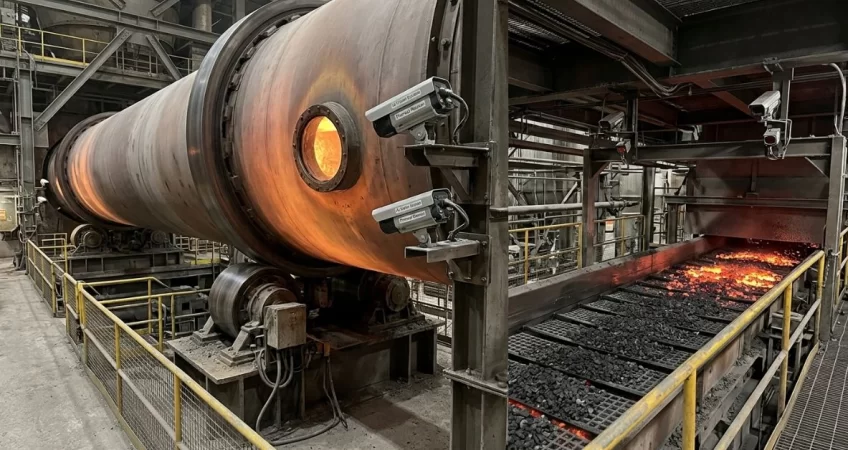
In a typical setup, cameras are mounted at strategic points around the kiln shell, burner zone, and cooler bed. These devices continuously stream visual and infrared data to an edge processing unit or centralized server. The AI model, trained on thousands of historical images and thermal profiles, compares live data against learned baselines. When it detects irregular hot spots, coating buildup, clinker flow disruptions, or refractory degradation, it generates instant alerts for plant operators.
Continuous Learning and Accuracy
What makes this approach powerful is its ability to learn and improve over time. As the system processes more operational data, it becomes better at distinguishing between normal fluctuations and genuine warning signs, reducing false alarms while catching subtle issues human inspectors might miss.
Role of AI Vision in Kiln Monitoring
Kilns are the heart of any cement plant, and their internal conditions are notoriously difficult to monitor using traditional methods. Manual thermal gun readings only capture a snapshot in time, and by the time an operator notices a problem, damage may already be underway.
Thermal Shell Monitoring
AI-powered thermal monitoring changes this dynamic entirely. Continuous scanning of the kiln shell allows the system to build a live temperature map, identifying hot spots that indicate refractory brick wear long before a shell failure becomes a safety risk. This early detection capability is central to any serious predictive maintenance strategy in cement operations.
Flame Pattern Analysis
Beyond shell temperature, AI vision systems can also monitor flame characteristics inside the burner zone. Flame shape, color, and intensity all carry information about combustion efficiency and fuel mix. By analyzing these visual patterns, the system can help operators fine-tune fuel input, reduce excess emissions, and maintain more stable clinker quality.
Role of AI Vision in Cooler Monitoring
Clinker coolers present a different but equally important monitoring challenge. Uneven clinker bed distribution, grate plate damage, or airflow blockages can significantly reduce cooling efficiency and increase energy consumption downstream.
Clinker Bed Surface Analysis
Cooler monitoring through AI vision involves analyzing the clinker bed surface in real time to detect red river formations, snowman buildup, or uneven bed depth. These visual cues, once identified only through experienced operator judgment, can now be flagged automatically and consistently, regardless of shift changes or staff turnover.
Integrated Kiln-Cooler Coordination
This level of industrial AI oversight also supports better secondary air temperature control, which directly impacts kiln combustion efficiency. When cooler and kiln monitoring systems work together, plants gain a more complete picture of the pyroprocessing system as a single connected unit rather than isolated components.
Key Applications Across Cement Plant Operations
Beyond core kiln and cooler functions, AI vision systems support broader plant automation goals. They assist with refractory life prediction, coating stability analysis, dust emission tracking near cooler vents, and even safety compliance by detecting unauthorized personnel movement near hazardous zones.
These applications extend the value of computer vision investments well past a single use case, making the technology relevant to maintenance planning, environmental compliance, and workforce safety programs simultaneously.
Challenges in Implementing AI Vision Systems
Adoption is not without obstacles. Harsh plant environments involving dust, vibration, and extreme heat can affect camera longevity and image clarity, requiring ruggedized hardware designed specifically for industrial conditions.
Integration with existing plant control systems also demands careful planning. Many cement plants still operate on legacy SCADA or DCS platforms, and connecting AI vision outputs into these systems requires both technical expertise and a change management approach that gets operator buy-in. Without proper training, even the most accurate AI system can be underutilized if operators don’t trust or understand its recommendations.
Future Trends in AI-Driven Kiln and Cooler Monitoring
Looking ahead, AI vision systems are expected to become more predictive and less reactive. Emerging models will likely combine visual data with vibration sensors, acoustic monitoring, and process data to deliver a holistic health score for kiln and cooler systems.
Cloud-based analytics platforms will also make it easier for multi-plant operators to benchmark performance across sites, sharing learnings and anomaly patterns across a broader operational network. As edge computing hardware becomes more affordable, real-time processing will move closer to the equipment itself, reducing latency and improving response times even further.
Key Benefits of AI Vision Systems for Kiln & Cooler Monitoring
- Continuous, real-time thermal and visual monitoring without manual intervention
- Early detection of refractory wear and potential shell failures
- Improved predictive maintenance scheduling and reduced unplanned downtime
- Better combustion efficiency through flame pattern analysis
- Enhanced cooler performance via clinker bed distribution monitoring
- Reduced energy consumption and fuel wastage
- Consistent monitoring accuracy regardless of shift or operator experience
- Support for emissions tracking and environmental compliance
- Increased worker safety through automated hazard zone detection
- Long-term equipment life extension through early anomaly detection
Final Thought
AI Vision Systems for Kiln & Cooler Monitoring represent a meaningful step forward for cement plants aiming to modernize operations without overhauling entire production lines. By pairing computer vision with predictive maintenance principles, plants gain earlier warnings, better efficiency, and stronger operational control across their most demanding equipment.
As industrial AI adoption continues to grow across the cement sector, plants that invest early in vision-based monitoring will likely find themselves better positioned to handle rising energy costs, tightening emissions regulations, and the ongoing push toward smarter, more automated cement plant automation strategies.
Need expert help with this? See how TECHCEM’s inspection & field services can support your project.