
Table of Contents
Establishing a cement manufacturing plant is an expensive and intensive industrial endeavor that requires meticulous planning, technical know-how, and a commitment to long-term financial stability. Cement is the most important material used in construction and infrastructure projects, making its demand relatively steady in both developed and developing economies.However, entering this business is not easy since it requires large-scale manufacturing systems, strict environmental regulations, and complex operational requirements.
Prior to launching a new project the entrepreneurs and investors must be aware of the entire process of manufacturing cement, beginning with the extraction of raw materials to the distribution of final products.An understanding of the industry’s structure and dynamics can reduce risk and increase the likelihood of long-term profit.The performance of cement plants is not just on its capacity to produce but also on efficiency in logistics as well as energy efficiency and positioning in the market.
Market Research and Feasibility Study
Analysis of viability and demand
Market research forms the basis of every cement plant. The initial step is to assess the demand for national and regional markets for cement in light of the growth of infrastructure as well as real estate development as well as government construction projects. Forecasting demand helps determine the optimal production capacity and scale of the plant.
A feasibility analysis also involves the analysis of competitors, trends in pricing as well as distribution networks and gap in demand and supply.It assesses financial viability based on estimated revenue, production costs, and expected return on investment.
This phase makes sure that the plan can be economically viable before substantial investment is made.
Site Selection and Location Planning
Choosing the right location is one of the most crucial decisions when building a cement plant. Cement manufacturing relies heavily on raw materials, such as clay, limestone, and gypsum. Therefore, being close to mining zones significantly lowers transport costs. Furthermore, having access to reliable transport infrastructure such as railroads, highways and ports .play an important role in ensuring efficient distribution.
The availability of power, water supply, as well as skilled labor should also be taken into consideration. The environmental factors like rules for controlling pollution and regulations for land zoning could affect the costs and viability. The location of a plant strategically will significantly increase efficiency, and also reduce the long-term logistics costs.
Regulatory Approvals and Compliance
The cement sector is highly regulated due to its ecological impacts. Before the construction process can begin, multiple approvals must be obtained from the officials of the government. This includes environmental clearances permits for mining, approval for land use, as well as industrial permits.
Environmental impact assessments (EIA) are required to make sure that the plant doesn’t cause harm to the ecosystems around it. The measures to control pollution should be integrated into the plant’s design at the very beginning. The compliance with regional and national rules is crucial in order to avoid legal problems as well as operational issues.
Plant Design and Technology Selection
Process and equipment selection
The design of the plant determines efficiency capacity, efficiency, and longevity of the cement manufacturing. Modern cement plants generally utilize dry process technology which uses less energy than wet processes that were used in the past. The type of kilns used or crushers, mills and automation equipment directly influence the productivity.
Digital monitoring and advanced automation technologies help optimize energy use and ensure consistent quality of the product. The plant’s layout must ensure a smooth flow of material from handling raw materials through final packaging. Selecting the best technology lowers the cost of maintenance and increases the overall efficiency of operations.
Construction and Infrastructure Setup
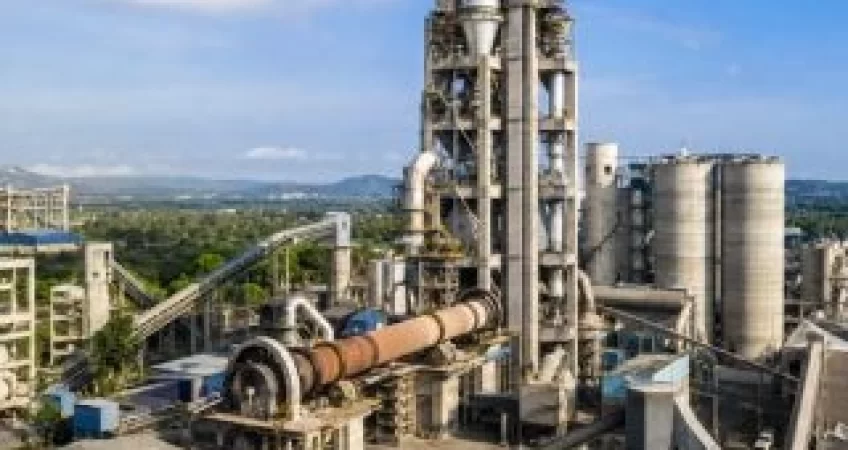
After planning and approvals have been completed, the building of the plant will begin. The next step is to build foundations for heavy equipment as well as structural steel work storage silos, as well as administration structures. An efficient civil engineering layout is crucial to ensure the stability of heavy-duty industrial machinery.
The installation of machines like crushers, rotary kilns. as well as cement mills, requires accuracy and technical oversight. The infrastructure for distribution of power as well as water supply internal transport systems are constructed during this period. The timely execution of construction projects is vital to avoid costly overruns.
Production Process Overview
The process of making cement involves multiple stages that begin with the extraction of raw materials to the final packaging of the product. Limestone first is extracted, then reduced into smaller fragments. It’s then mixed with various other substances and then fired in a kiln with very high temperatures in order to create Clinker.
Clinker is then cooled and ground with gypsum in order to create Fine cement powder. The quality control process is monitored through every step using laboratory testing as well as automated monitoring systems. The consistency of production assures that the finished product meets the standards of industry and expectations for customers.
Cost and Financial Planning
Financial planning is a crucial aspect of setting up a cement plant. The cost total includes the capital expense of purchasing machinery, land acquisition construction, as well as the development of infrastructure. Operating expenses include labor, energy use, maintenance, and transportation.
An accurate financial model is helpful to identify the likelihood of profitability and breaks-even timeframes. The financing can be secured by way of equity investment as well as bank loans or institution-level finance. A well-organized cost management system is vital to ensure competitive pricing on the marketplace.
To conclude, building a cement plant requires a combination of strategic planning, technical knowledge, and financial discipline. Every step starting from feasibility studies through production, should be planned and executed carefully in order to guarantee long-term success as well as sustainability in a highly business that is highly competitive.
Final Thought
Setting up a cement plant is not just a manufacturing decision but a long-term industrial commitment that demands precision at every stage. From selecting the right location to managing large-scale operations, every choice directly influences profitability and sustainability. With proper planning, efficient resource utilization, and strong compliance practices, a cement plant can become a highly stable and scalable business in the construction ecosystem.