
Table of Contents
Understanding Pet-Coke Volatility and Industrial Challenges
The price of pet coke is influenced by many factors, including developments in the crude oil market and restrictions on imports-exports, transportation expenses, as well as environmental policy. As many industrial enterprises depend heavily on a continuous energy supply and supply, even a slight increase in prices for pet coke could significantly boost the cost of production. Businesses operating with slim profit margins typically struggle to stay competitive as the market for fuel becomes unstable.
Impact of Fuel Price Fluctuations on Costs and Emissions
The frequent fluctuations in the price of pet-coke directly impact operational budgets as well as longer-term energy plans. Apart from financial worries industry must address the environmental issues associated with the combustion of pet-coke. Pet-coke is a source of sulfur with a high content that can contribute for sulfur oxide (SOx) emission. Incorrect combustion procedures can contribute to the increase of NOx (NOx) emission and particle polluting.
Rising Demand for Fuel Flexibility in Heavy Industries
In a time when governments are tightening emission standards and the market for fuel becomes more unpredictable companies are looking for solutions that can be adapted to the needs of their customers. Multi-fuel burners provide facilities that can reduce dependence on one fuel source, while enhancing the efficiency of operations as well as environment-friendly compliance.
Another issue is maintaining stable processes throughout transitions of fuel. Different fuels possess different quantities of calorific, levels of moisture as well as combustion characteristics. Rapid changes in the composition of fuel with no proper control of the burner may affect flame stability along with the temperature of the kiln, as well as general process performance. Industry is investing in the latest burner technologies as well as digital monitoring systems in order to make sure that fuel changes are smoother and stable performance of the plant.
Strategies for Real-Time Fuel Switching in Multi-Fuel Burners
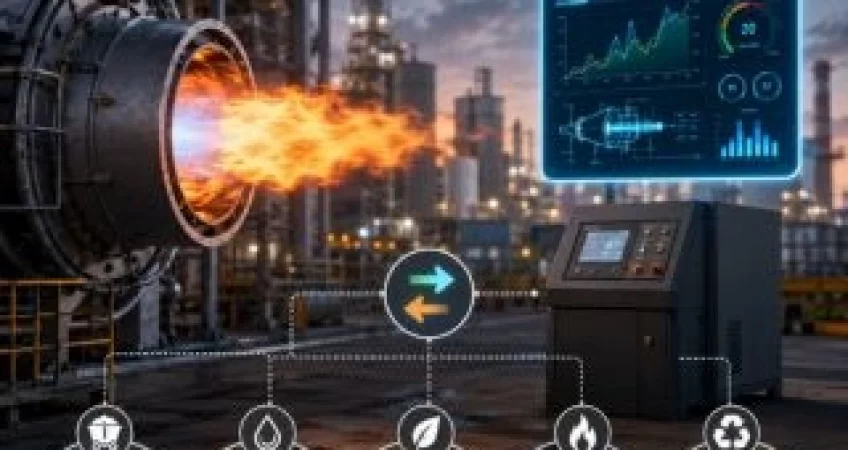
Multi-fuel burning systems are constructed to run on various fuel types like coal, pet-coke biomass, natural gas, the refuse-derived fuel (RDF) as well as alternative liquid fuels. The systems permit operators to shift fuel types throughout plant operations without creating major interruptions to production processes.
Using Alternative Fuels, Automation, and Smart Monitoring
Real-time fuel switching is an essential strategy to manage pet-coke price volatility. Through the use of alternative fuels as pet-coke prices increase, companies are able to reduce their fuel costs and increase flexibility in operations. The most advanced burner management systems employ automation techniques that constantly examine the conditions of combustion as well as fuel quality and the market’s price trend.
Benefits of Smart Combustion Control Systems
Sensors that digitally monitor combustion systems measure temperatures of flames, oxygen levels as well as pressure and emissions data in real-time. On the basis of this data the automated systems will recommend the fuel mix that is most efficient or adjust the flow of fuel automatically in order to ensure optimal combustion efficiency.
The most popular methods employed in industrial facilities are:
- Mixing pet-coke and biomass with RDF in order to cut fuel costs
- Natural gas is the preferred fuel for the time of high sulfur emissions.
- Utilizing automated control systems for burners to guarantee stable fuel transitions
- Monitoring NOx and SOx emission levels using digital sensors
- Modifying the airflow and parameters of combustion to improve performance
They help companies reduce their dependence on a single fuel source, while also improving their environmental performance. For industries like cement manufacturing, even minor adjustments to optimize fuel consumption could result in significant costs savings over long periods of.
Importance of Operator Training and Process Stability
Operator expertise plays a major role in ensuring successful fuel switching in industrial plants. Although automation improves efficiency, skilled operators are still required to monitor combustion patterns and maintain burner stability during fuel transitions. Proper training programs help reduce the risk of unstable flames, incomplete combustion, equipment damage, and process interruptions.
Stable combustion is especially important when switching between fuels with different calorific values, moisture levels, and combustion characteristics. Well-trained operators combined with automated burner control systems help maintain consistent kiln temperatures, production quality, and operational safety.
Future Trends in Sustainable Industrial Combustion
Need expert help with this? See how TECHCEM’s process engineering services can support your project.